Sutton joins coalition to Lift the Ban on asylum seekers working in UK

Subscribe to continue reading
Subscribe to get access to the rest of this post and other subscriber-only content.
Wallington South Councillors’ Winter Update

What a year it has been! One day we are celebrating the Queen’s Platinum Jubilee, and then later mourning her sad passing. We welcomed our new King, got through three Prime Ministers in as many months and have gone from the social deprivations of a pandemic to the financial deprivations of a cost of living crisis. We saw war in Ukraine, a winter World Cup, had a heatwave in Summer and snow in December.
Perhaps this signals that nothing should be taken for granted. Christmas is often a time to reflect on what really matters to us – friends, family, a roof over our head, enough to eat. Let us be grateful for what we do have, and be kind to those who don’t have all of those things. See below for helpful links to help for those in need.
WARD NEWS
Snow and Ice
The recent blast of snowy weather may have felt very seasonal, but it also brings hazards and inconvenience some of us may not be prepared for. Look out for your local grit bins and feel free to use the grit on your stretch of residential road and on pavements. If the grit is getting low, report it to the council. There is an interactive map on the website to help you find your nearest grit bin.
Make sure your vehicle is de-iced and snow scraped from the roof as well as the windows before setting off. Public transport may well be disrupted so do check before heading out.
Lidl Refurbishment and Disabled Access to Wallington Train Station
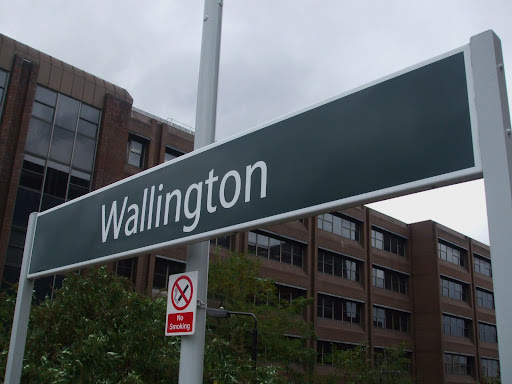
The Lidl store in Beddington Gardens is undergoing some refurbishment works to improve the accessibility of the car park and the entrance to its store.
Unfortunately the works have meant that the access to the train station through the car park is unavailable. There is no public right of way but Lidl have assured us that access will be available when the car park and store is reopened.
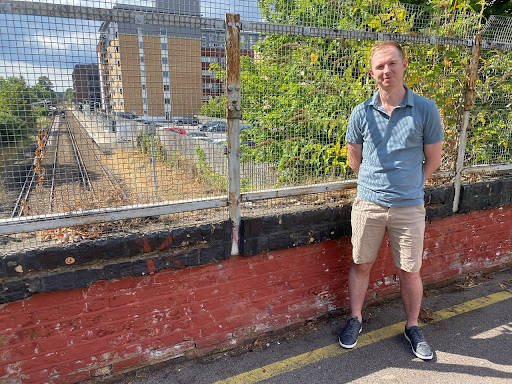
In the meantime disabled access to the south side platform is via the public right of way from further up Beddington Gardens and down the track that runs alongside the station. Access to stations is the responsibility of Network Rail. We appreciate that the track is not suitable for wheelchair users and we asked for the vegetation to be cut back, which has now been done. Lidl advise that their works should be completed and access restored by February/March next year.
Upcoming Streetworks

The council’s Highways Team have advised councillors of the following streetworks taking place in our area over the next month that may cause some disruption due to temporary traffic lights or road closures:
49-69 Beddington Lane footpath just north from Asda junction there are planned water company works from 21st December to 23rd December which will require temporary traffic signals.
Foresters Drive between Sandy Lane South and Mollison Drive from 3rd to 20th January utility works by Southern Gas Network will take place requiring temporary multi-way traffic signals.
We are pleased to see that the pedestrian refuge improvements at the Sandy Lane South/Stafford Road junction have now been completed to TfL’s satisfaction and they have removed the temporary ban on buses turning here so the 154 can resume its service to Roundshaw residents.
Wallington Community Events
It is the All In Wallington team, made up of local businesses, residents and your Wallington South Ward councillors (past and present) that brings you the annual Wallington Music Festival and the Christmas Fayre to celebrate the switch-on of the festive lighting.
We were delighted to be able to bring back both events in full this year following their suspension due to the Covid pandemic.
We had a lovely sunny day for the Music Festival to showcase the fantastic local musical talent curated by Dan Smith. Food and drink was provided by local businesses with additional stalls all organised by Alan Fitter, whilst the event was compered by the fabulous Jack Bennet. Much fun was had by all.
We are hugely grateful to our generous sponsors Carpenter & Co Solicitors, Raff Electrical, Sutton Council and the Gary Mason Charity. Also thanks to other local organisations for their practical help including Sutton College, Woodcote Flying Club and Churches Together along with our steadfast group of regular volunteers. The sponsorship enables us to pay a small amount to our performers and hire the necessary equipment.

The Christmas Fayre saw a range of stalls in Wallington Square, the return of Santa to his Grotto and beautiful singing from local choirs. We have a Christmas tree in Wallington thanks to Your Move and tree lights funded by Raff Electrical and erected and decorated thanks to the generosity of Beeches Tree Care. Huge thanks to Ric Adams for transforming an empty shop into a magical grotto for Santa and providing the gift bags. The free use of the empty shop is thanks to Winston Group, the owners of Wallington Square. We were delighted to have the Mayor of Sutton and our MP with the Christmas Card competition winners to perform the switch on of the lights. Thanks to our sponsors Carpenters & Co Solicitors for their generous contribution to fund the event and thanks also to construction firm, Lifebuild for the loan of the safety barriers.
Thank you especially to all our lovely residents who supported this event by turning up in droves. The queue for Santa’s Grotto began an hour before it even opened but everyone was so patient. The elves were delighted how well behaved the children were despite the wait and have put in a good word for them with Santa!
Old Wallington Arms applies to become a gym

The new owners of the building that once housed the Wallington Arms pub and previously the Jon Jackson has applied to change the use of the ground floor to a gym. We ensured that the pub was listed in the council’s Local Plan as one to protect so a change of use requires planning permission. The Planning Department has yet to make a decision on the application.
Permitted Development and HMOs
The Government sets out what types of development require planning permission and those which do not. In recent years the Conservative government has expanded what falls within ‘Permitted Development’ and so does not require planning permission.
Permitted Development includes small property extensions and garden buildings that are ancillary to the property. It also includes conversion of a property into smaller units to house up to six people, known as a house in multiple occupation (HMO). The extended rules now allow an additional two storeys to be added to flats and for commercial units to be easily changed to a wide variety of other uses – retail, hot food sales, financial services, fitness, nurseries, residential, school or industrial use.
Permitted Development means that the council has no powers to prevent these development changes from taking place.
As councillors we have campaigned against the extension of permitted development rights as residents regularly complain about the negative impacts of some of them. In particular there is concern about the number of family homes being converted into HMOs. Whilst well managed and carefully adapted HMOs can be a valuable option for a single person that can’t afford to rent a place of their own, poor conversions that seek to squeeze in as many people as possible at extortionate rents are not good either for the occupants of the property or the neighbours. It also reduces the number of family houses available further driving up house prices. As the council is reviewing its local planning policies it is looking into ways to prevent losing more family homes to HMO.
Even though converting a house into a six person HMO doesn’t need planning permission, they do still need licensing and must comply with health and fire safety standards. If you have concerns about poor quality conversions you can alert the council’s regulatory services team to check if the property is licensed and safe to occupy.
Working for our residents
Casework from our residents keeps us busy all year round. Here are some of the issues we have been helping with since our last update:
Hendfield Court – residents alerted us to the fact that the sole lift for this tall block of flats had been out of action for some time. We know there are a number of elderly people living in these flats and those on the higher floors were effectively housebound as they were unable to manage the stairs. Carers and deliveries were not always able to get to them and no one was getting any information from the managing agents about when the lift would be repaired. We therefore alerted the council’s social services team who put some pressure on the agents to get the lift repaired asap. Despite the social care team being told that all vulnerable residents were being looked after, we wanted to check for ourselves. So Muhammad and Jayne carried out door to door housecalls and provided contact details for social services. It was good to see many of the residents were being helped out by neighbours but we did need to intervene when we learnt that a resident who had been in hospital was about to be discharged home still needing round the clock carers. With the lift out of action it was not guaranteed that the carers would be able to give this support so with the family and social care team’s agreement the discharge was delayed until the lift was back in action. Thanks to the external pressure the necessary part was acquired more quickly although this has not fully resolved the problem as the lift still intermittently breaks down. Clearly a more permanent fix is required and we will keep up the pressure to see this happen.
Ross Parade flytipping – thanks to our efforts to tackle flytipping in Ross Parade we have seen major improvements in the cleanliness of this street. It was clear that the large number of flats on the bagged waste system did not help so we successfully argued that Napier Court should have communal waste bins and got wheelie bins reinstated for the new houses on Ross Parade.
Graffiti removal – it is the responsibility of the shops and private landowners to remove graffiti on their property. We would encourage local businesses in particular to promptly clean off any graffiti as otherwise it just attracts more in the area, leaving our town looking run down and unattractive to shoppers. The council will clean off graffiti on public land and Sam was successful in getting some removed from Bridge Road over the railway. We were also pleased to see the flytipping hotspot over the fencing on this bridge all cleared making this a much improved area.
Help with forms – we have helped residents apply for blue badges and disabled parking bays, and directed others to forms on the council’s website where they can report planning breaches, apply for housing help and submit comments on planning applications.
A change to our Ward Surgery Venue
Our monthly ward surgeries have now moved from the Wallington Sainsburys to Cox Pippin Cafe in Wallington Square. They continue to be held on the third Saturday of every month (except August) from 10am to 11:30am. Do drop by to say hello or seek our advice. No appointment necessary. We also recommend the coffee and toasted sandwiches!

Report issues in your area
Muhammad, Sam and Jayne report issues they see as they are out and about in the ward including litter, flytipping, damaged signs, faulty crossings, graffiti, raised paving slabs, faded yellow lines etc. You can help too by reporting issues via the council website here. The Report an Issue form gets sent directly to the service meaning a quicker response than phoning the council.
BOROUGH NEWS
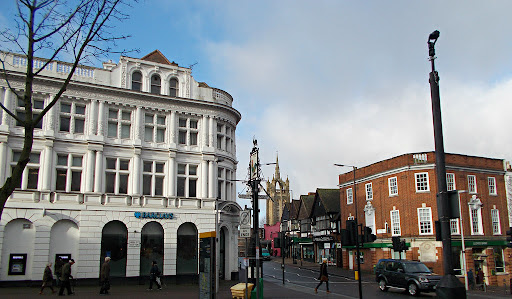
Support through the Cost of Living Crisis
There is a range of support provided by Sutton Council, community groups, local charities, and partners for issues including food, finances, housing, energy and tips for saving money. See the council website for more details.
The council is also opening its libraries as warm spaces for people during the day with volunteers on hand to offer help and advice. Wallington Library is included in this scheme.
The council website also details available support for businesses.
To be kept up to date with the latest information and support for residents sign up to the council’s weekly e-newsletter, Sutton Scene, or for businesses sign up to receive Sutton Business Scene.
Sutton Council’s plans for the St Nicholas Centre
With retail in trouble due to more people shopping online, the St Nicholas Centre fell into decline and the owners were planning to sell it off to be developed into housing. The council thought this was wrong and last year stepped in to purchase the shopping centre with a view to redeveloping it in a way that would add to the vibrancy of the town centre.
The current proposal is to move the library and civic function into the centre of the high street on part of this site and also create more space for community use such as activities for young people. This will bring greater footfall into the town centre and ensure that its exceptionally long high street will be attractive to new businesses and reduce empty spaces. It fits alongside the council’s other investments in the high street such as Oru’s co-working space, the redevelopment of the old Chicago’s as a cultural and performance space and the repurposing of buildings that enabled Sound Lounge to come to Sutton.
The redevelopment of the old civic offices site will enable the council to meet its housing targets which the Local Plan directs largely to the main town and district centres thereby protecting the suburban character of the rest of the borough, which local residents agreed to when consulted on the local plan.
Additional housing around the town centre also brings additional footfall which can only help current businesses as well as attracting more. New development also brings additional funding to invest in the area and is the means to deliver the affordable housing that is needed too.
LOCAL PLANNING NEWS

You can click on the links below to view and comment on new applications.
DM2022/01617 Crosspoint House 28 Stafford Road Wallington SM6 9AA Prior Approval in relation to the erection of 2 new floors to provide 19 self contained residential units. Granted
DM2021/01225 6 Park Hill Road Wallington SM6 0SB Change of use from C4 (6-bedroom house in multiple occupation – HMO) to Sui Generis (7-bedroom – Larger HMO) Refused
DM2022/00278 Gower House 75 Woodcote Road Wallington Sutton SM6 0PU Demolition of a two-storey former care home and erection of a four-storey residential building comprising 11 flats. Granted
DM2022/00161 Garage Adj. 86 Blenheim Gardens Wallington SM6 9PS Demolition of existing garage and erection of a detached two storey dwelling. Refused
DM2021/01802 16 – 18 Beddington Gardens Wallington SM6 0HU (Lidl) Erection of a single storey front and side extensions, new canopy, alterations to the car park layout to include, new lighting, cycle and trolley bays. Granted
DM2021/01162 Mulberry House 26 Mulberry Mews Wallington SM6 8RF Demolition of the existing property and adjoining row of garages and erection of 7 two storey terraced dwelling houses with accommodation in the roof space, refuse storage and parking to the front, accessed from Elgin Road and/or Ross Road. Still pending decision
DM2021/00835 50-52 Stanley Park Road Carshalton SM5 3HW Demolition of two semi detached dwelling houses and erection of a two storey building comprising of six flats with 6 off street parking spaces. Still pending decision
DM2021/00429 Roy Smith Garage Ltd Elgin Road Wallington SM6 8RE Demolition of existing garage and existing building and erection of two two-storey detached buildings (one with roof accommodation) to provide 8 self contained residential units. Still pending decision
New Applications
DM2022/020237 Beddington Gardens Wallington SM6 0HU Prior Approval for change of use from Class E (Commercial, Business and Service) to C3 (Residential) use.
DM2022/01927 106A Stafford Road Wallington SM6 9AY Change of use from Class E (offices) to Class F1 (place of worship)
DM2022/019256 Woodcote Road Wallington Sutton SM6 0NN (old Wallington Arms Pub) Change of use to Class E to provide gym, alterations to fenestrations, plant equipment and cycle parking
DM2022/01840 Wallington High School For Girls Woodcote Road Wallington Sutton SM6 0PH Application to remove condition 8 (Use of sports hall) to allow the hall to be used by the public, community groups or organisations.
DM2022/01386 Greenbelt Land At Woodcote Green Garden Centre 4A Woodmansterne Lane Wallington SM6 0SUDemolition of existing structures and erection of a 70-bed specialist neurological nursing home (Use Class C2) with associated access, parking and landscaping.
DM2022/01264 4 Milton Road Wallington SM6 9RW Change of use from 6-bed House in Multiple Occupation (HMO – Class C4) to 8-bed House in Multiple Occupation (larger HMO – Sui-Generis).
DM2022/00567 Workshop 105 Stafford Road Wallington SM6 9AP Change of Use from Class E (light industrial – workshop) to Sui Generis MOT garage, erection of a two storey rear/side extension to the workshop.

With our best wishes for a Merry Christmas and a Happy New Year
Sam Martin, Jayne McCoy & Muhammad Sadiq
Your Councillors for Wallington South
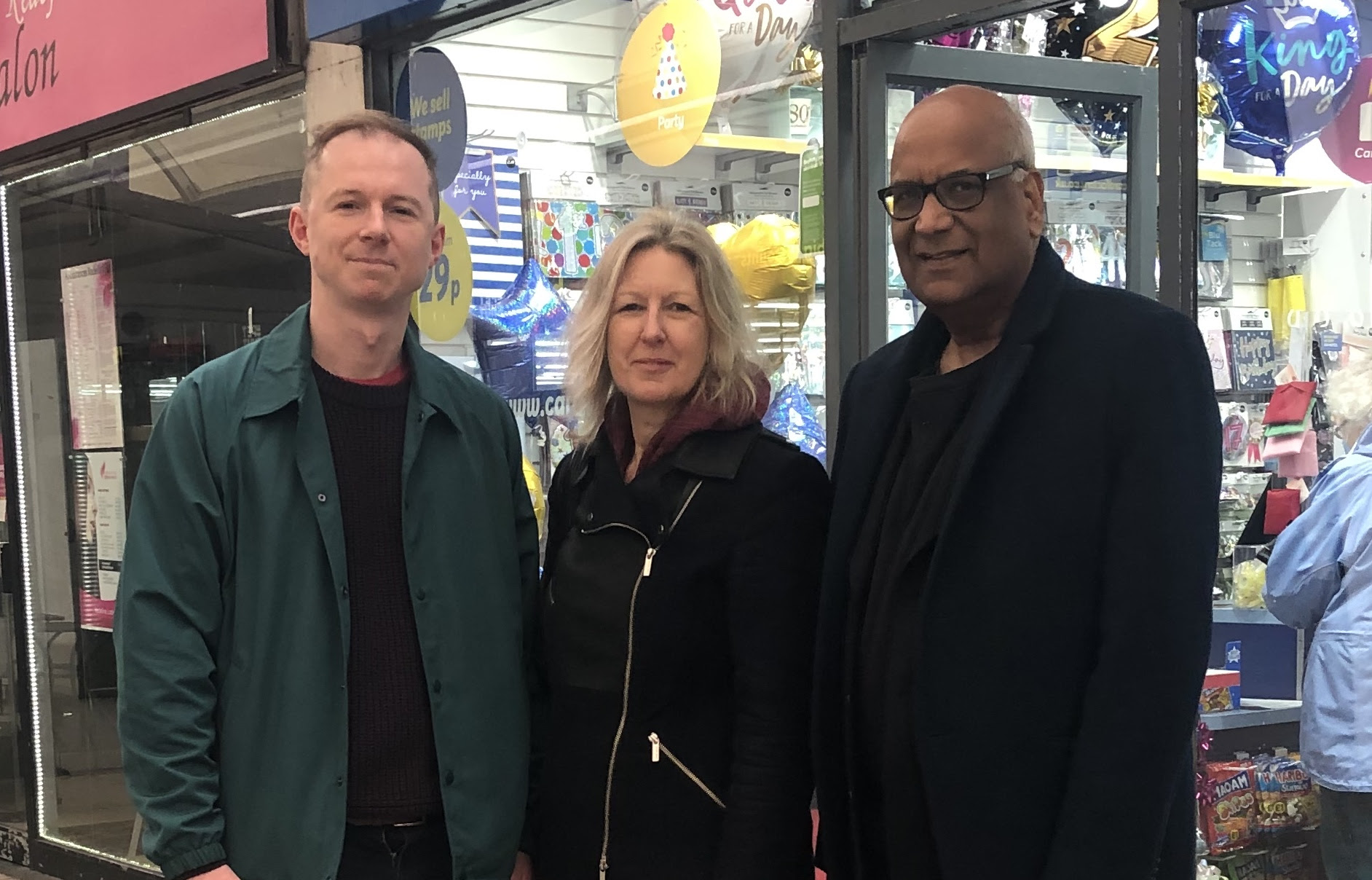
Wallington South Ward Councillors’ Spring Update

Brighter days ahead
The blossom on the trees and shy crocuses poking out their heads provides a promise that brighter days are ahead. With lockdowns and the grief for loved ones lost to Covid weighing upon us like dark clouds it feels like it has been a long, long winter. But seasons turn, vaccines are provided and restrictions lifted so that we can cautiously find our way back to meeting friends and family and reconnecting with the world.
It has been lovely talking to so many of you in person once again. We have heard your stories of both resilience and heartbreak, suffering and stoicism. The kindness of our community has been evident, and we hope that what we have been through will make us kinder and more appreciative of what we have. If we can help with anything, do get in touch, or come by and say hello at our monthly surgeries in Sainsburys.
WARD NEWS
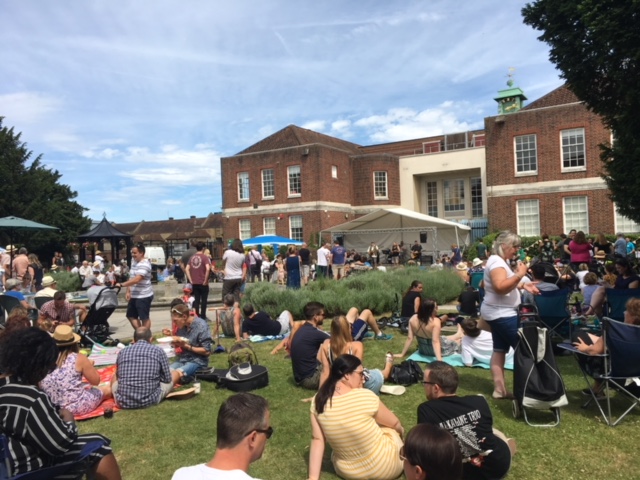
The Wallington Music Festival is Back
Our annual free music festival will be back in full swing on Saturday 16th July so save the date in your diary. Those who have attended previous events will know that the local musical talent is exceptional and will have you dancing in the street. The live music will start at noon in the Wallington Library Gardens with special food and drink stalls alongside Anna’s cafe, and children’s activities available close by. Or bring a blanket and a picnic and settle in for a family-friendly afternoon. In the evening the live music will move into local café’s and pubs to keep the festival spirit going.
This event is brought to you by local businesses and residents – by the community for the community – and is one of the best things about living in Wallington.
Police Local Crime Survey and action on ASB

Your councillors have been disturbed to hear many residents report increasing incidents of crime locally including burglary, pickpocketing and thefts from and of motor vehicles including the widespread catalytic converter thefts. This is making people more fearful and wanting to see more police on our streets.
We have raised this with our local Police Safer Neighbourhood Team and also the Police Borough Commander. Our concern is that the merger of Sutton, Croydon & Bromley Police has meant that resources have been taken away from our area as it has always been a low crime area. However, that low crime has been the result of dedicated local teams who were allocated solely to their areas. Once we had a five strong team, now we have two and vacancies, and they can be redeployed to help out elsewhere. We think criminals have noticed and moved in to take advantage.
In response the local Police Team are undertaking two pieces of targeted work. One is to address pickpocketing and shoplifting in Wallington town centre, and another to address the anti-social behaviour linked with people illegally using e-scooters in the area.
The police have also responded by asking us to circulate a Police Survey: https://www.smartsurvey.co.uk/s/I2YK3A/. Please do take the time to fill it in advising of any concerns and experiences you have about local crime. The Police need this data so they can apply for any additional resources they need to tackle the issues.
Wallington, and Sutton, have always been one of the areas with the lowest crime in London, and we have been proud of our partnership working with the police to achieve that. We are not prepared to lower our standards so we will fight to see more police on our streets with the resources they need to keep us all safe.
To help do ensure you report any instances of crime to the police, call 999 if it is happening, or even if you have suspicians about something – let the police do the triaging of whether it needs an immediate response. Or you can report it online if it is after the event. Reports provide important data for the police and help them address criminal activity.
You can also join the friendly local Safer Neighbourhood Team Ward Panel and get insight into the work of our local police and help set their priorities at our quarterly meetings. Get in touch with us or the Wallington South SNT and we can get you added to the panel.
Double Yellow Lines
Double yellow lines have been put in for most junctions in our area and along Woodcote Road to improve road safety and prevent pinch points and sightlines being obstructed. Unfortunately, due to parked vehicles many of these lines were unable to be completed.
The contractors have a list of these snagging issues and will be returning to finish the job. This has taken longer than we expected and we have been chasing for this work to be completed. We are advised that lining was done across a very wide area and the contractors are working their way across the borough finishing them off. However, the work had to be paused over the winter as the lines cannot be applied to wet or frozen ground. The work has resumed so we hope to see them all completed soon.
Zero-tolerance of flytipping in Wallington

In response to complaints from residents about the state of our streets and increasing incidences of flytipping the council has employed contractors dedicated to applying a zero-tolerance approach to flytipping. Your ward councillors have identified the key areas to target in our ward.
Like many other boroughs, flats above shops are provided with special bags to dispose of their waste. These bags are required to be placed by a street litter bin on an allocated day each week for collection. This is to help increase recycling and we are proud to see our recycling rates now among the top boroughs in London for recycling.
Unfortunately seeing bags on the street and being collected has led others to believe that it is ok to dump any old bag of rubbish in the street, and on any day – or in some cases everyday. This pile up of waste then attracts other flytipping and we have seen a proliferation of beds, other furniture and shops’ trade waste left on our streets. This inevitably attracts foxes who then scatter the waste across our streets.
The only reason our streets do not look worse is because of the council’s work to remove any flytipping promptly and clean up the mess. In key flytipping hotspots like Ross Parade, street cleaners have to attend twice daily to clear up the mess. But this efficiency also means people think this is an easy way to get rid of their waste.
Your waste is your responsibility and there are easy ways to get rid of your bulky waste. You can book a slot to take it to the Recycling and Reuse Centre in Kimpton for free. There are usually slots available to book up to a week ahead. Or you can arrange an excellent value for money bully waste collection from your doorstep by the council. This is only £31.80 for up to three large items e.g. a three-piece suite, or a fridge, a chair and a wardrobe. Or it is £53.30 for 4-6 items.
However, this action on flytipping has uncovered some underlying issues that we have been working with residents to address. Some flats above shops have not been receiving their bags from the council, or not receiving enough. Others had put their waste out on the correct day but as it had not been collected due to the HGV driver shortage they had been fined for it being out on the wrong day. Your councillors have been working with these residents and have got fines cancelled where the residents had not been at fault.
If you do receive a fine that you believe is unjustified then ensure you write to sutton.council@lasupport.co.uk setting out your reasons.
Helping local businesses

We provide advice and assistance to local businesses as well as residents. Recently we have helped a convenience store sort out a licencing paperwork issue, mediated for Mazzi’s Diner to help them get compensation for a power outage, provided advice about planning permissions and directed small businesses to financial support.
We are also very proud of our local businesses many of which give back to the area whether by sponsoring our community events, hosting fundraisers for the mayor’s charities or supporting local causes.
Go Local to save the planet

Local ventures are making it easier for us to reduce our impact on the planet. Order your fruit and veg from Sutton Community Farm and you are reducing food miles, avoiding harmful pesticides and minimizing packaging. They will deliver to your door or to a community pick up point. Jayne has been using them for years and will vouch for the quality of the produce. You can also volunteer at the farm and get healthy at the same time. Sam Martin does this as a way to get from behind his laptop and breathe some fresh air.
Noah’s Health Food Shop on Stafford Road will refill your household cleaning product containers with planet-friendly formulas, which helps reduce plastic waste and the impact of harmful chemicals.
Emmaus and Nickel Support will restore and reuse your unwanted furniture which can be used to furnish accommodation for homeless people or sold to support their charitable work.
Shopping in charity shops is a great way to recycle items and rebel against the throwaway fashion culture.
Wallington Library Gardens Pond
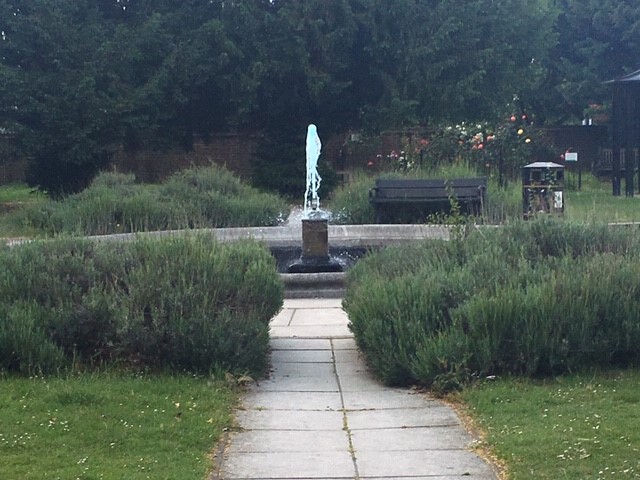
We were pleased to see that the pond is being maintained with it drained, refilled and the damaged netting replaced in February.
Please remember that the pond is unsuitable for fish and do not add any plants to the pond as they clog up the filters and stop the fountain from working.
St Patrick’s Church Hall Polling Station
The local council elections will take place on Thursday 5th May this year and Wallington South will have the same polling stations as usual at St Patrick’s, Park Hill Road; United Reform Church on Holmwood Gardens and The Centre by St Michael’s and All Angels in Milton Road.
Residents have raised concerns because the church hall usually used as the polling station at St Patrick’s has been demolished and is being rebuilt. We can confirm that the council’s Electoral Services Team have arranged with the church that for this election the church will be used as the polling station whilst the church hall is still being built.
BOROUGH NEWS

Help with rising energy costs
The government has arranged for all households in bands A to D to receive £150 off their council tax bill to help with the increase in energy prices. The council will administer this automatically if you have registered to pay your council tax by direct debit. If not then you will need to apply for the rebate. The council will provide more information on how to claim once it becomes available, after April. There is also some funding available to help those on low incomes in higher bands. Again, the council is waiting on more information from the government on eligibility.
If you are in Bands A to D and you do not need the rebate then you can donate it to people who do. National Energy Action are a charity that seeks to address fuel poverty and are running a campaign to encourage people to donate their rebate. This campaign is supported by Utilita Energy who have been encouraging councils to highlight this campaign. We are delighted that Sutton was the first borough to sign up to this.

Helping victims of the War in Ukraine
Many people want to help the victims of the war raging in Ukraine. Funds are needed more than items as it is difficult for goods to find safe routes those in need. You can donate via the British Red Cross.
The government has announced its Homes for Ukraine scheme where people can sponsor a named Ukrainian individual or family and provide accommodation. Councils will be required to administer the scheme and carry out checks but the government has yet to issue the guidance on this. In the meantime you can register your interest in participating in the scheme on the government website.
WARD PLANNING NEWS

DM2021/02097 Monarch House 7 Stafford Road Wallington SM6 9AN Change of use from Class E (Office) to Class C3 (Dwelling) to provide 20 self contained flats. Refused as does not satisfy conditions for prior approval
DM2021/02491 127 Woodcote Road Wallington Sutton SM6 0QD Outline application for the demolition of existing semi-detached house and replacement block of 2 flats, detached 4-storey block of 7 flats, provision of 9 car parking spaces, 5 cycle storage spaces, refuse storage and modified vehicular access, and with access to be determined. Refused
DM2021/01225 6 Park Hill Road Wallington SM6 0SB Change of use from C4 (6-bedroom house in multiple occupation – HMO) to Sui Generis (7-bedroom – Larger HMO) Refused
DM2021/01033 1 Elgin Road Wallington SM6 8RE Erection of a two storey detached dwellinghouse Refused
DM2021/01329 Wallington High School For Girls Woodcote Road Wallington Sutton SM6 0PH Extension/widening of existing vehicular access to and from Woodmansterne Lane and relocation of pedestrian footpath. Granted
New Applications:
DM2022/00278 Gower House 75 Woodcote Road Wallington Sutton SM6 0PU Demolition of a two-storey former care home and erection of a four-storey residential building comprising 11 flats, bin and bicycle storage and plant. Front and rear of site to be re-landscaped, including resident car parking and communal rear garden. Council to deliver new build council housing to Passivhaus sustainability standards
DM2022/00161 Garage Adj. 86 Blenheim Gardens Wallington SM6 9PS Demolition of existing garage and erection of a detached two storey dwelling with refuse store and parking at front.
DM2021/01802 16 – 18 Beddington Gardens Wallington SM6 0HU (Lidl) Erection of a single storey front and side extensions, new canopy, alterations to the car park layout to include, new lighting, cycle and trolley bays.
DM2021/01162 Mulberry House 26 Mulberry Mews Wallington SM6 8RF Demolition of the existing property and adjoining row of garages and erection of 7 two storey terraced dwelling houses with accommodation in the roof space, cycle storage to rear, refuse storage and parking to the front, accessed from Elgin Road and/or Ross Road
We hope you find our updates useful. Feel free to pass them on to your friends and neighbours if you think they will be of interest.

Cllr Steve Cook, Cllr Jayne McCoy, Cllr Muhammad Sadiq and Sam Martin
Your Lib Dem team for Wallington South
P.S. Please don’t hesitate to contact us if there is anything we can do to help: wallingtonsouth.libdems@gmail.com
……..trying to save the planet one day at a time
Using up fresh fruit
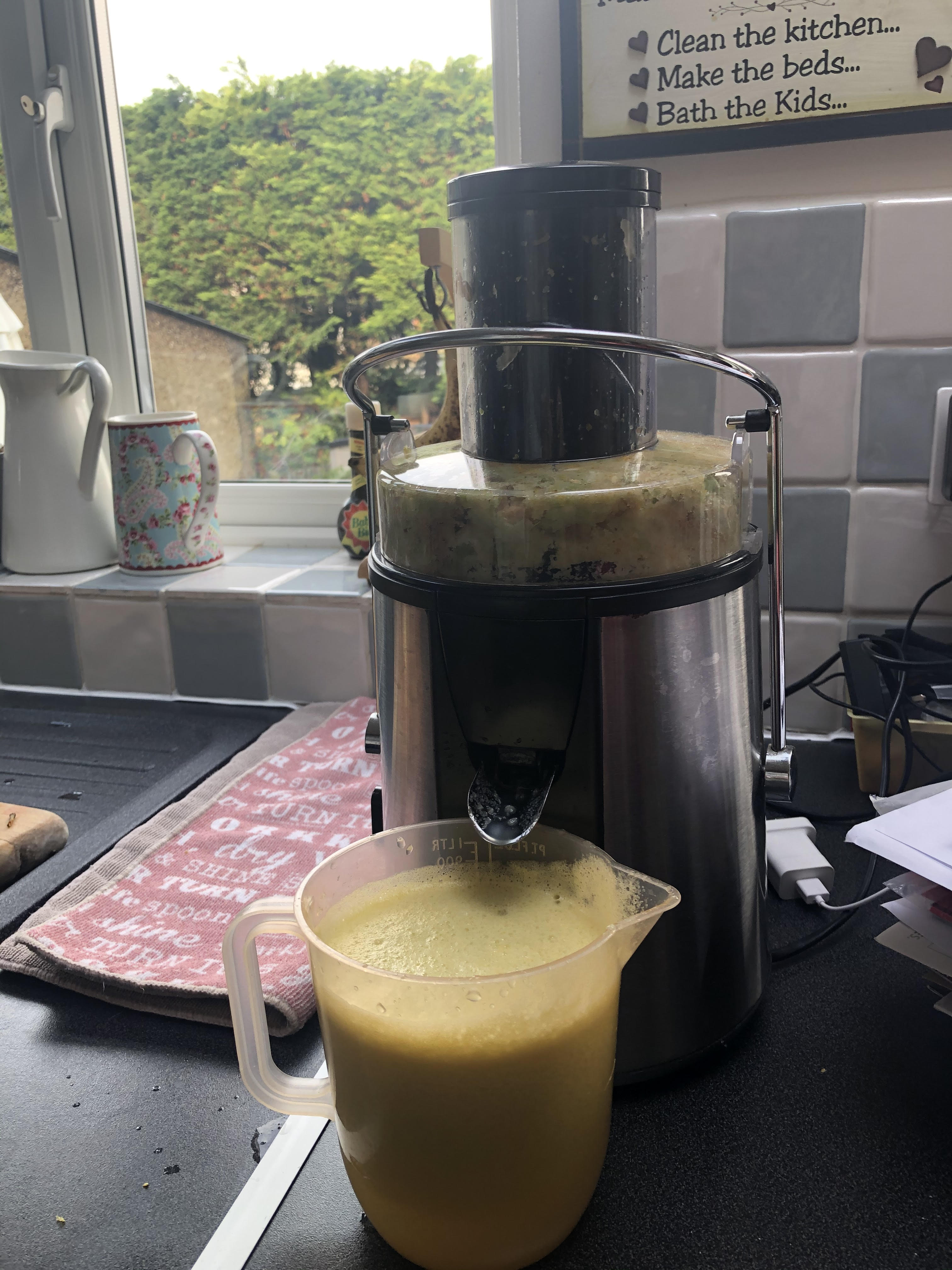
I am sure I am no different to other families and find fruit past its best lingering in the fridge or fruit bowl. I can’t bear throwing fruit away so as the proud owner of a juicing machine I recently turned a glut of oranges and wrinkly clementines into juice.
I then mixed up apples, pears and an orange to make a tasty and nutritious breakfast juice. This makes a great breakfast when heated with porridge oats instead of milk (yes I love my porridge).
In the summer I have soaked my oats in fruit juice to make overnight oats to be topped with yoghurt and more fresh fruit next morning.
And all the unused pulp went into my composter to be eventually used as compost for the garden. Nothing wasted!

COUNCIL BUDGET SPEECH 28th February 2022
“Budgets are very dry reports setting out what the council will need to spend next year and how it proposes to make up the funding gap with savings and council tax increases.
We can be proud that every year this council has been run by Liberal Democrats, the auditors have stated that our budget demonstrates sound financial management, and good value for money. The bankruptcy of Croydon under Labour and the government bailout of Conservative-run Surrey demonstrate what an exceptional record that is.
But these numbers on a page – well over lots of pages, don’t do justice to the work the council does, serving our residents.
So let me try and turn them into something more real.
When a young mother finds herself homeless fleeing domestic violence, the council is there to put a roof over her head. It will also direct her to support and advice from organisations that receive funding from the council.
For the elderly man struggling to cope looking after his ill wife, the council arranges carers to visit and help. If she has dementia then the council funds the specialist Admiral Nurses.
When a father loses his driving job as his eyesight is failing, the council helps him claim the benefits he is entitled to, so he can support his family whilst he looks for new work. And the council can direct him to appropriate support and retraining to assist in finding that work.
When a child struggles to cope with school and life and growing up, the council ensures there are support services on hand to help.
The council also provides educational support for the child with special needs, to help them achieve their full potential.
It is the council that ensures that schools are built to meet the increased demand for places, and sees that every Sutton child is offered a place in school.
For the woman who finds her mobility deteriorating the council will arrange for adaptations to her house, such as hand rails in her hallway, and a walk-in shower. It can provide a blue badge so she can maintain her independence or put in a disabled parking bay by her house.
The council also builds new homes, including homes that are fully wheelchair accessible.
It is the council that finds and funds the foster parents for children whose parents are unable to look after them, ensuring they receive the care and support every child needs.
The council provides advice and support and funding to local businesses, and its investment in town centre buildings helps them and the high street, ensuring a vibrant space where people can gather for shopping, entertaining and socializing.
And of course the council also empties the bins, sweeps the streets, maintains our beautiful parks, manages thousands of trees, funds the traffic wardens, maintains the public car parks, repairs the potholes, fixes the streetlights, runs the libraries and provides funding for community projects.
But 70% of the council’s spend is on supporting children and adults who need a little extra support. And that is what makes this a Liberal Democrat budget. We believe everyone deserves the opportunity to live a full and rewarding life. Being poor should not deny you a good education, having a disability should not prevent a child from playing with their friends. Being old should not mean you are confined to your home. Losing your job should not mean that your children have to go hungry, and being unable to cope with mental health issues should not mean you end up on the street.
The Conservative mantra is that council taxes should be kept down, but Council tax is the funding we use to serve and support our residents. To make up the funds that have been taken away by this incompetent uncaring government.
Failing to plug the funding gap with a council tax increase means that residents, like the examples I have given, will no longer receive that help and support. Because services cost money, especially those services delivered by people for people, like home carers, social workers, street sweepers and housing advisors.
Keeping council tax low would deprive our residents of the support they need to live full and active lives. It would be an abstention of responsibility.
And abstention of responsibility sums up the opposition’s approach in the last four years of this council.
Council budgets house the homeless, feed the hungry, provide jobs and education, and save lives. These are not responsibilities this administration is prepared to ignore.
Please support this budget.”
Wallington South Ward Councillors’ Autumn/Winter Update

The nights are truly drawing in and Winter is just around the corner. We have been out and about, helped by colleagues, knocking on your doors to see how you have been doing through the pandemic. We have heard some very sad accounts of loneliness and loss, but also tales of great resilience and stoicism. It has been great to hear your praise for the council’s social care support staff, as well as how the community pulled together either to help or to just keep spirits up.
In the meantime here is our latest update.
WARD NEWS

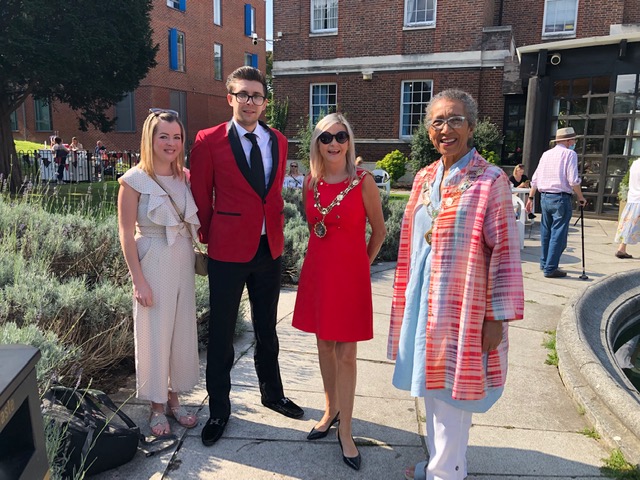
Mini-Music Festival lifts the spirits
After missing a year, the Wallington Music Festival was back. The September sun shone kindly on us and despite being ‘mini’, the festival was big on local musical talent. Old favourites like ELTEL, Chloe Ray, Jack Bennett and Anne Sumner entertained us and were joined by fabulous new acts The Thornes, Jordan Rutland and Robyn Perren.
The Woodcote Flying Club and the Dukes Head provided food and drink stalls in addition to Anna’s Café, whilst Jean Grima provided a popular children’s craft stall.
There was fantastic attendance across all ages, with Wallington clearly delighted to be able to enjoy a community event after the long lockdowns.
Many thanks to the All In Wallington Group who made this event happen, and to Carpenters Solicitors for their generous sponsorship.
Never be afraid to ask for help, and if you are not sure who to contact, try us, as we may be able to direct you to the right place.
Tackling litter and anti-social behaviour in Ross Parade
Residents have complained to us about Ross Parade being treated as one big waste site with people dumping their rubbish in the street on a daily basis. Rubbish left in bags get ripped open by the foxes and strewn around the area. This also attracts other vermin. This is unacceptable for the people who live here or who have to walk through the mess on their way to work every day.

Our fantastic town centre street cleaner has to return here twice a day just to keep on top of the litter and flytipping. Because of his diligence people think that this is an easy way to dump their rubbish problem on others. Flytipped waste attracts more waste and residents have witnessed people and businesses coming from outside the area to dump their rubbish here.
Flats above shops in this area are provided with special coloured bags that they are authorised to leave by the street bin for collection on one agreed day per week, but no other waste should be left here.
In response to these flytipping reports the council has followed up and issued fines to those witnessed flytipping and issued warnings to local businesses to make proper arrangements for their trade waste. Notices have been put up being clear what is flytipping and if the problem continues CCTV may be used to increase prosecution of offenders.
With the reopening of the pubs the area has also seen a return of the anti-social behaviour in the vicinity of the Wetherspoons. Fights and urination in the street have been witnessed and reported both to the police and the pub management. The pub has barred key offenders and the police are following up witness reports. Hopefully the close working of residents, councillors, the police and the council will see these incidents reduced to a minimum.

Wallington Remembers
Once again we undertook to continue the special tradition of holding a Poppy Planting Remembrance event in Wallington on the Saturday before Remembrance Sunday. Thank you to James Hills the vicar from Holy Trinity for leading the service, Ronnie Cummings the bugler, Ashley Dickinson representing the local Royal British Legion and reciting the exhortation, Chas Bower representing the Royal Marines and to all those who attended the event to pay their respects.
Street begging in Wallington
Residents have reported people begging in Wallington town centre. The police advise that these beggars are con artists preying on the generosity of residents. There is no reason for anyone to be sleeping rough on our streets as the council has funding to provide dedicated housing support for rough sleepers.
If you feel intimidated or threatened by any beggars on our streets call 999 immediately.
Pigeon-proofing Wallington square

Wallington Square is in private ownership with the canopy erected by the Winston Group as part of their redevelopment of the centre. Unfortunately, the canopy made the square an ideal roosting spot for pigeons. After repeated pleas from your ward councillors we finally got the owners to install the spikes to deter roosting. It turns out they are not 100% effective at deterring the pigeons and as a result we receive regular complaints about the disgusting and unhygienic piles of pigeon mess in the square.
The square has a public right of way through it and after some legal arguing we had to concede that the cleaning up of the mess fell to the council. We are particularly unhappy about the additional cost of cleaning it up falling on the taxpayer when the canopy was not erected by the council. Moreover the council’s contract for street cleaning is only for litter sweeping. As a result we have had to agree an additional quarterly clean to address the pigeon mess. This is not proving sufficient to keep the area clean so we are investigating alternative ways to deter the pigeons, including looking at how Westminster has a bird of prey fly around Portcullis House every so often which appears to have a lasting effect of deterring pigeons from roosting there.
We will keep you updated.
Mini Christmas Festival on Friday 26th November

The All In Wallington Group felt the need to bring some celebrations to the dark winter nights whilst also being mindful of the continuing threat of Covid. We therefore held a mini Christmas Festival to celebrate the turning-on of the Festive Lights. A Christmas Tree was installed thanks to sponsorship by Your Move and decorations courtesy of Raff Radio, musical entertainment secured and Santa paid us a visit. Sadly we couldn’t have a Grotto this year, but there was a cheeky elf or two distributing goodies.
Many thanks yo everyone who joined us to welcome in the Festive Season.

Bandon Hill School Street in Beddington Gardens now operational
Strong support from local residents and parents means the Beddington Gardens school street scheme is now formally implemented and operational.
The restrictions will prevent motor vehicle entry to Beddington Gardens west of Boundary Road rom 8:15am till 9:30 am and 2:15pm till 3:30pm weekdays during term time. There will be exemptions for residents and carers, SEND vehicles and emergency services.
Contrary to our previous update, ANPR cameras are not going to be used here because the volume of different SEND transport apparently makes this unworkable. The scheme will be monitored by Parking Enforcement officers. Exempt vehicle owners will still need to register (free) via the council website to avoid being fined.
Jubilee Gardens wins the vote for a GreenSpace project
Jubilee Gardens behind the Jubilee Health Centre won the vote in the GreenSpace project survey. This means the area will receive investment to help make the area more resilient to climate change. This could mean planting trees, or plants to encourage biodiversity and creating better drainage. Residents will be invited to help shape the work, so look out for info in Sutton Scene.
Ward Surgeries and casework

We were back with our in-person surgeries in September and it was good to ditch the video calls and chat in person once again. These will continue at the rear of the Wallington Sainsburys upstairs by the lifts every 3rd Saturday in the month, 10-11:30 am. No appointment necessary.
We can also undertake site visits and meetings to discuss casework issues. Contact us via email or telephone as usual.
BOROUGH NEWS
Free Grit available from Kimpton Park Recycling Centre
The annual free grit offer means collection of 10kg of grit per household or business will be available between 22nd and 28th November. This is so that residents can grit their driveways and areas in front of their property when the frosts hit. You can collect on behalf of elderly friends or neighbours without cars. Delivery to your home can be requested if you are on an assisted waste collection.
This year you will need to book a collection slot at the recycling centre. For more information see here.
Local Business Support Grant Launched
The council has launched a new business support grant to help our local businesses get back on track after the pandemic and lockdowns. The grant is the Business Networks Support Fund and is open to applications from business groups, networks and support organisations or any business that can deliver short-term projects to benefit local businesses. The projects should help Sutton’s businesses by delivering training and support, increasing footfall and/or customer base, building networks or improving their business area. Grants of between £5,000 and £25,000 are available to cover the costs of delivering the projects and the total funding available for this scheme is £150,000.
For more information see here.
WARD PLANNING NEWS
DM2021/00985 6 Woodcote Road Wallington SM6 0NN Change of use of 1st floor to 7 room larger HMO Conversion of upper floors of previous Wallington Arms to residential Application withdrawn
DM2021/00224 13 Milton Road Wallington SM6 9RP Change of use from C4 to Sui Generis for use as a larger House in Multiple Occupation, erection of a single storey rear extension and conversion of loft space involving alterations a dormer extension at rear and rooflights to front roofslope Permission granted
DM2020/00450 Monarch House 7 Stafford Road Wallington SM6 9AN Erection of a single storey rear conservatory, enclosure of under croft to form additional office floor space, alteration to parking, vehicle access from Onslow Gardens with new gates and boundary treatment. Permission granted
DM2021/01033 1 Elgin Road Wallington SM6 8RE Erection of a two storey detached dwellinghouse Pending consideration
DM2021/00526 74 Park Hill Road Wallington SM6 0RQ Erection of a detached dwelling with associated access, parking and landscaping Backgarden development Pending consideration
DM2021/00429 Roy Smith Garage Ltd Elgin Road Wallington SM6 8RE Demolition of existing garage and existing building and erection of two two-storey detached buildings (one with roof accommodation) to provide 8 self contained residential units with car parking Pending consideration
New Applications:
DM2021/01162 Mulberry House 26 Mulberry Mews Wallington SM6 8RF Demolition of the existing property and adjoining row of garages and erection of 7 two storey terraced dwelling houses with accommodation in the roof space, cycle storage to rear, refuse storage and parking to the front, accessed from Elgin Road and/or Ross Road
DM2021/01329 Wallington High School For Girls Woodcote Road Wallington Sutton SM6 0PH Extension/widening of existing vehicular access to and from Woodmansterne Lane and relocation of pedestrian footpath.
DM2021/00835 50-52 Stanley Park Road Carshalton SM5 3HW Demolition of two semi detached dwelling houses and erection of a two storey building comprising of six flats with 6 off street parking spaces
We hope you find our updates useful. Feel free to pass them on to your friends and neighbours if you think they will be of interest.
Cllr Steve Cook, Cllr Jayne McCoy & Cllr Muhammad Sadiq
Your Lib Dem team for Wallington South
P.S. Please don’t hesitate to contact us if there is anything we can do to help: wallingtonsouth.libdems@gmail.com
Sutton’s low-carbon heat network up and running

My speech to full council on 22nd November explains what the council’s district heat network, SDEN is, and how it contributes to our ambitions for a sustainable future for our borough:
In October, on the eve of COP26, the Government published its Net-Zero Strategy: Build Back Greener.
The policies that hit the headlines were ending the sale of new petrol and diesel cars by 2030, and grants to install heat pumps. What was also included, but didn’t make the front pages, was the commitment to fund and deliver more low carbon heat networks.
Well here in Sutton, in 2021, we already have a low-carbon heat network, delivering hot water and heating to the new homes being built in Hackbridge. Delivered by this council, it currently supplies 423 properties with fossil-fuel-free energy. The site is still being built out by Barratts, and when completed there will be over 800 residential properties, a supermarket, health facility and office space all being supplied with low-carbon energy.
It is being delivered by, SDEN, the company set up by this council to deliver this project, and it receives support and funding from the Govt’s Department for Business, Energy and Industrial Strategy, the department that wrote the Build Back Greener strategy.
As the CIPFA report highlights, this is just phase 1 of a bigger initiative, because now the key infrastructure is in place – delivered within budget – the network can be extended to other existing or new developments, making low-carbon energy available for even more of our residents and businesses.
In 2001 this Liberal Democrat council helped facilitate BedZed, the UK’s first major zero-carbon community, delivered by Bioregional and Peabody Trust. This earned Sutton the reputation of being at the forefront of delivering sustainable projects.
The idea for a district heat network in Sutton came about in around 2012, putting Sutton once again ahead of the curve in its ambitions to achieve a zero-carbon future. And this time the project was delivered entirely by the council.
So what exactly is this heat network that has been built?
The company, SDEN, has installed a highly insulated pipe network connecting the landfill and ERF site in Beddington to the old Felnex site in Hackbridge.
That pipework is now connected to the landfill gas engines that are burning off the methane and CO2 that is emitted from the landfill site. SDEN captures the heat from that process and delivers it via the pipework to New Mill Quarter residents to heat their homes. Once the landfill source becomes depleted the connection will move over to the ERF.
The ERF is already using the heat generated from disposing of our waste to generate electricity for the National Grid. However, the process still produces enough waste heat to also power the whole of the Barratts site and many more sites, and the SDEN pipework will capture this and deliver it around the heat network.
At the Barratts site the energy goes through the Barratt’s-built energy centre and into the homes and businesses there to provide heating and hot water on demand.
This network means the residents and businesses do not have gas boilers in each of their properties, and as they are not using fossil fuel derived energy such as oil or gas, their supply is low-carbon.
We agreed to a review of the decision-making process for this project and we fully accept the findings of the CIPFA report and will incorporate their recommendations into our project management procedures.
So why are the opposition so desperate to continue to undermine this achievement? Because they never supported it, and they want it to fail. They have made public allegations of wrongdoing. which the CIPFA officials have confirmed are unsubstantiated by any actual evidence. Instead, the chief criticism the CIPFA report makes is that the council was a bit over-optimistic.
Well thank goodness for a bit of optimism and a can-do attitude, because thanks to that, this borough is making headway towards achieving a zero-carbon future. That is something that would never have happened if it was a Tory-run administration.
But while others are digging over past assumptions that were bound to change, and seeking to scupper our attempts to put the company on a sound financial footing, this Liberal Democrat-run council will be getting on with reducing our carbon footprint to help save the planet.
Wallington South Ward Councillors’ Summer Update

Who would have believed back in March 2020, that we would still be battling the Covid pandemic in July 2021 after over a year of significant changes to our way of life? We missed our overseas holidays last year, and many will have to forgo them again this year. If we want 2022 to allow us a lot more freedoms then we all still need to take a cautious approach to the lifting of restrictions, and also a selfless one as the wearing of masks protects others, not ourselves.
Covid is not the only major threat to our way of life. The wildfires, floods and soaring temperatures in Greece, Germany, Belgium, The Netherlands and Russia make the impacts of global warning feel a lot closer to home. Flash flooding and thunderstorms are becoming more common in the UK and we will need to be prepared for more potential extreme events.
As with Covid, the only response is to adapt our own behaviour, and push the government to use a mix of regulation and investment to drive industry and science to make the changes and innovations to enable us all to live more sustainably.
WARD NEWS
Bin collections disrupted by national driver shortage

We have received a number of complaints about bins being uncollected in recent weeks. This is due to a national HGV driver shortage and other councils are experiencing similar problems.
To try to keep on top of collections Veolia are asking drivers to work the maximum weekly hours, additional staff working weekends and overtime, and pooling staff from other contracts. There is also a major driver recruitment programme underway.
Most affected are communal collections at flats, with delayed collections, sometimes until the weekend, including on Sundays.
The online Report it function is updated to note delayed collection schedules but if your waste goes two weeks without collection get in touch with us for us to chase up.
Bandon Hill School Street in Beddington Gardens

The consultation following the Beddington Gardens school street trial showed a large majority of parents and local residents were in favour of the scheme. This means the school street scheme will be reinstated and effective from the October half term this year, subject to the formal statutory process.
The restrictions will prevent motor vehicle entry to Beddington Gardens west of Boundary Road from 8:15am till 9:30 am and 2:15pm till 3:30pm weekdays during term time, enforced by automated number plate recognition cameras (ANPRs).There will be exemptions for residents and carers, SEND vehicles and emergency services.
Budget pressure sees library car park charges increase
Through ten years of austerity and massive cuts to government funding for councils we managed to keep the half an hour free parking at Wallington Library car park. Unfortunately, the additional financial pressures from dealing with the pandemic and government failure to properly fund social care means we can no longer argue for Wallington to be treated differently from other district centre car parks.
This year all the car park charges will be aligned and increased slightly. This still keeps Sutton as having some of the lowest parking charges in London.
This move also fits with the council’s aim to improve air quality by encouraging residents to make healthier choices about how they travel to their local high street.
There are still a good number of short stay free parking spaces in Ross Parade, Shotfield and along Stafford Road. There are plenty of disabled parking spaces in the library car park and on surrounding streets. So people wishing to use their cars will still have a choice to use free spaces that is far in excess of the numbers in other district centres, in addition to the excellent public transport links in Wallington, another reason we found it hard to argue for special treatment for Wallington district centre.
I know that some people will be concerned about the impact on local shops. Studies show that people who walk, cycle or use public transport to travel to a district centre tend to spend more per visit than those who drive. Indeed the 30 minute free parking could be detrimental to local businesses as it encourages visitors to only stay for half an hour as it is free. This stops them from lingering for a coffee or lunch, or browsing other shops and instead sees them attend to their immediate business and then rush back to their cars.
Grass verge cutting

The council’s contractors IDVerde have experienced some staff shortages that combined with weather conditions has delayed the cutting of grass verges and mowing in parks. To catch up on the schedule IDVerde are using additional subcontracted labour and are working weekends.
The cut grass is left in situ to mulch down as the most environmentally approach, but with the grass being longer than usual this may look a bit messy for a while.
The Council is trialling biodiversity verges in a few locations around the borough. Biodiversity verges will have a different mowing regime designed to encourage wildflowers to thrive and set seed, which is beneficial to birds, insects and other wildlife. Reduced mowing also saves on fuel and exhaust emissions too.
These verges will be cut towards the end of August and all the arising will be cleared away.
The verges will then be mowed again in the autumn and possibly again in the early spring if the grass starts into growth. This means the verges will flower to benefit wildlife during the spring and summer, but then be tidied up again for the autumn and winter period.
Iceland Summer Event Saturday 21st August
Our Wallington Iceland store has arranged a special summer event to raise funds for Home-Start Sutton as their charity which is also a Mayor’s Charity.
This will take place in the afternoon in front of the Old Town Hall with stalls, Tombola and the Met Police Bus.
Do come along and show your support to help this excellent local charity.
Double Yellow Line painting
As a result of the Parking Consultation double yellow lines will be introduced to all junctions where they are not currently, to improve sightlines and safety, and yellow lines proposed for most of Woodcote Road, and in Stanley Park Road close to schools and the roundabout. The lining works in Wallington will take place during July and August so please observe any temporary parking restrictions to enable this work to be done.
Greenbelt reprieve as care home development rejected

Sutton Council Planning Committee refused the application to build a 70-bed care home on Woodcote Greenbelt land behind Wallington Girls School.
Jayne spoke at the meeting objecting to the application due to its encroachment on the Greenbelt and overdevelopment of the site.
The claims by the developer that there was a need for a dementia care home that overruled the Greenbelt status protecting it from residential development was refuted by the Head of Adult Social Care who had advised there was an oversupply of such provision in the borough.
Local resident Mr Simms also spoke at the meeting and pointed out the same developer was building a care home less than a mile away in Purley.
I know local residents affected by the development and all those who want to preserve our precious Greenbelt will be pleased that the Committee supported the officer decision to refuse.
Tackling litter hot spot at Charlotte Road

The litter bin in Charlotte Road close to the junction with Stafford Road is proving to be an attractor for flytipping. Waste illegally left here often contains food so the bags are regularly ripped open by foxes and strewn across the street. It is extremely unpleasant for local residents and their children to wade through this mess everyday on their way to school or work.
Your ward councillors have been working with the council to put a stop to flytipping here. Regulatory services have carried out enforcement visits to the local shops and takeaways to confirm they have trade waste arrangements in place and advise that any waste left by the bins constitutes flytipping.
Flats above shops are provided with marked bags that they are authorised to leave by the bin for collection on one agreed day per week, but no other waste should be left here.
We have also asked for additional street cleaning of this area, and continual monitoring to catch the flytippers.
The council is also cracking down on littering and anyone caught dumping their rubbish or takeaway packaging in the road will be liable to a hefty fine.
Wallington Mini-Music Festival this September 18th

We very sadly had to cancel last year’s Wallington Music Festival. This year it is back, but in light of the ongoing concerns about the virus we will be limiting it to a daytime event in the Wallington Library Gardens, and postponed it to September.
There will still be food and drink stalls and free entertainment for all the family. Bring a picnic and a blanket and enjoy our exceptional local talent.
Thanks to the All In Wallington team for continuing to organise this free local event, and to Carpentors Solicitors for once again generously sponsoring the event.
The Mayor of Sutton Cllr Trish Fivey will attend to open the event.
Wallington comes together to Support the England Team

It was lovely to see the community come together to support our England Football Team as they geared up for the final game of the Euros against Italy. We gathered red and white T-shirts, some with good luck messages to the team, and made them into a giant England flag in front of the old town hall.
Sadly England couldn’t quite best the experience of the unbeaten Italian team, but our boys did us proud and we can dream of glory for the World Cup.
Ward Surgeries and casework
We suspended our face to face councillor ward surgeries during the pandemic. However, we hope to return to in-person surgeries in Wallington Sainsburys from September. Do stop by to say hello, we have missed you.
We can also undertake site visits and meetings to discuss casework issues. Contact us via email or telephone as usual.
BOROUGH NEWS
Changes to the Kimpton Way Household Reuse & Recycling Centre
The booking system will continue as it has proved popular and minimising queuing into the centre. However the centre has sadly been misused by some commercial companies which are disposing of their commercial waste at the taxpayer’s expense.
To address this a fair use policy has been introduced limiting residents to 12 bookings in a calendar year. Thanks to the booking system we have a better idea of the number of times that residents use this site. The vast majority (96%) of residents use the HRRC less than 12 times a year and 50% use it once only, so there are many opportunities for them to increase usage and their recycling frequency.
For any resident who has a genuine need to use the HRRC more than 12 times a year, they can contact the Council who can provide them with advice and support. The Council is willing to be flexible to address genuine need when there are exceptional circumstances.
Free school meals in school holidays
The council will continue to provide free school meals over the summer holidays to eligible families. Parents of children who are already registered to receive free school meals do not need to apply. Other low-income with pre-school or home-educated families may also be eligible and should visit the council website to apply.
WARD PLANNING NEWS
DM2020/01805 Land At Woodcote Green Garden Centre Woodmansterne Lane Wallington SM6 0SU Demolition of existing structures, and erection of a two storey nursing home comprising 70 bedrooms, car parking, cycle storage, bin storage, access, landscaping and other associated works Refused by Planning Committee 7th July 2021
DM2020/01589 31-35 Stafford Road Wallington SM6 9AP (old BP Garage site) Prior Approval in relation to the erection of 2 new floors to provide 10 self contained residential units. Prior approval refused
DM2020/00450 Monarch House 7 Stafford Road Wallington SM6 9AN Erection of a single storey rear conservatory, enclosure of under croft to form additional office floor space, alteration to parking, vehicle access from Onslow Gardens with new gates and boundary treatment. Still pending decision
New Applications:
DM2021/01033 1 Elgin Road Wallington SM6 8RE Erection of a two storey detached dwellinghouse
DM2021/00985 6 Woodcote Road Wallington SM6 0NN Change of use of 1st floor to 7 room larger HMO Conversion of upper floors of previous Wallington Arms to residential
DM2021/00526 74 Park Hill Road Wallington SM6 0RQ Erection of a detached dwelling with associated access, parking and landscaping Backgarden development
DM2021/00429 Roy Smith Garage Ltd Elgin Road Wallington SM6 8RE Demolition of existing garage and existing building and erection of two two-storey detached buildings (one with roof accommodation) to provide 8 self contained residential units with car parking
DM2021/00224 13 Milton Road Wallington SM6 9RP Change of use from C4 to Sui Generis for use as a larger House in Multiple Occupation, erection of a single storey rear extension and conversion of loft space involving alterations a dormer extension at rear and rooflights to front roofslope
We hope you find our updates useful. Feel free to pass them on to your friends and neighbours if you think they will be of interest. Continue to stay safe.

Cllr Steve Cook, Cllr Jayne McCoy & Cllr Muhammad Sadiq
Your Lib Dem team for Wallington South
P.S. Please don’t hesitate to contact us if there is anything we can do to help: wallingtonsouth.libdems@gmail.com
Response to Motion on SDEN
This was my speech in response to the Conservative motion on SDEN:
As you can see, our amendment fully supports the resolution to initiate an independent investigation into the issues noted in the motion.
We are happy to do this because we have complete faith in the integrity of the modelling, the integrity and competence of the officers involved in the work, the professional expertise of KPMG who reviewed the model, and the democratic processes that relied on it.
But serious allegations have been made publicly, and in writing, challenging the integrity of the work and all those people involved.
At a previous council meeting Cllr Crowley claimed there had been false accounting. Now that is a very serious accusation that if true could lead to imprisonment of those involved in such activity. Such allegations should therefore never be made lightly nor be taken lightly.
That is why our amendment is clear that these are all allegations, not facts, nor indeed are they just harmless ‘comments’ as such ‘comments’ have consequences.
Some of the claims have already been strongly rebutted. However, opposition members remain determined in their efforts to undermine this project, a project which this council should rightly be proud of, as it demonstrates a significant commitment to reducing our impact on the planet and providing our residents with an alternative to using fossil fuels.
Instead we are having to fight off repeated and inaccurate claims with the deliberate aim of damaging reputations.
The first claim made in the opposition’s motion is based on the assumption that the financial model needed to achieve a certain internal rate of return in order to obtain funding. That allegation is factually wrong. Public Works Loan Board funding can be obtained to support any project irrespective of its IRR. A decision could have been made that the project would be subsidised by the council and that funding would still be accessible.
The other claim is that ‘extra’ buildings were used in the modelling.
This claim of ‘extra’ buildings relates to a residential care home that was included in the outline planning application. This was later changed by Barratts to Assisted Living Accommodation. As my colleagues on the People Committee will be aware, Assisted Living is the more modern equivalent of a care home. So the change was purely in name, and the energy consumption attributed to each is exactly the same. Thus the change had no impact on the model.
These examples, specifically cited in the motion, demonstrate the fragility of the allegations being made.
You might ask if they are so easily dismissed, why would we agree to an investigation?
The reason is because these allegations have been repeated publicly, on social media and directly to residents. Such allegations damage the reputation of the council, and the reputation of its company SDEN.
It is also damaging and demoralizing for officers, and organisations, involved with the project, and damages their professional reputations too.
The resulting stress and the challenge to officers’ integrity and hard work cannot be accepted as just collateral damage in a political smear campaign. Allegations with such consequences must be challenged, and when they persist in the face of evidence to the contrary, the only option is an independent review.
There has been no denial that the project has encountered its difficulties. An infrastructure project of this size would be unusual if it had not. The delayed build out of the site has eroded projected profits considerably, and the large number of outages has caused considerable concern for residents and the council alike.
All efforts are being put into working with Barratts to prevent further outages and the more recent pressure drops, and senior SDEN staff have been on site to apologise and explain the situation to residents.
So we are agreeing with the opposition that an investigation is needed to put to bed the concerns about SDEN, and I hope they will agree with me, that when the investigation clears the council and officers of any wrongdoing, as I have no doubt it will, that all these allegations of fraud, false accounting and mispractice are fully retracted and cease to be repeated.
Please support the motion as amended.
Notes
Public Works Loan Board (PWLB) funding is available to councils. Councils can apply for the funding to support capital projects. Companies owned by councils cannot apply directly for the funding so the funds would be drawn down by the council.
Cllr Nick Mattey has led a campaign to undermine and discredit the decentralised energy project from the moment he heard about it. He was a member of the Housing, Economy and Business Committee at the time it was considering whether to give the project the go ahead. (Cllr Mattey had applied to be chair of this committee within weeks of his election as a new councillor. He also applied for chair of the Environment & Neighbourhoods Committee at the same time. He was unsuccessful in both bids.) He pronounced at a meeting when members were being briefed on the project that the business case would never work, and the council should be investing in solar instead. This was before members had seen the business case.
Since then he has never varied from this stance, and gone to great lengths to prove his prediction right, including setting up a fake SDEN website, contacting developers telling them not to deal with the council, protesting outside estate agents marketing properties to be supplied by SDEN, telling customers they are being ripped off and submitting numerous FOIs and enquires tying up officers’ time to feed his conspiracy theories.
Conservative members have ridden on the back of this campaign to help ‘fuel the fire’.
One early FOI Cllr Mattey submitted was to release the financial model used to inform the decision to progress with SDEN. This was at a time when contracts with third parties were still being negotiated and the model contained commercially sensitive information. An FOI means that the information is publically available. However as a member of the committee at the time Cllr Mattey already had that information under his privilege as a councillor. The council had to spend significant money preventing public release of this information until after all contracts had been agreed.
The key claim underlying the Conservative motion is that information subject to a review by KPMG, one of the big four international accountancy and consultancy firms, was deliberately falsified by the council to ensure the project went ahead. The KPMG review compared both the original and revised financial models and dug deep into the assumptions behind them and the changes. The Conservative’s premise that the council would be willing to invest millions in a project if the figures showed it could never cover its costs at a time when council budgets were under unprecedented pressure is ridiculous at best, and I will look forward to hearing KPMG’s response to the idea that a little council like Sutton could pull the wool over the eyes of an organisation whose very premise is to detect fraud and false accounting.
The other myth is that the planning permission for the Energy Recovery Facility (ERF) was dependent on delivering a district heating system, but this was not a condition of the permission.
Wallington South Ward Councillors’ Winter Update

It feels a little difficult to be positive following the news that we are now in the most restrictive Tier 4 thanks to the highly infectious new variant of the coronavirus. Christmas is a time of family and festivity bringing warmth at the darkest point of winter, and it feels cruel that this virus has denied many of us that comfort.
There will be many of you grieving loved ones, or missing those you have been separated from for too long. Some will be facing unemployment and an uncertain future. Far too many will struggle to afford to feed their families, or keep a roof over their heads. Few of us will be untouched by the events of the last year.
So perhaps all we can ask, with that in mind, is that we all be kind to each other. Not just with actions, but also in words. We can’t take away the pain, or solve all the problems, but we can all be a little kinder to each other.
We hope you can all find a little light in this darkness over the Christmas period.
WARD NEWS
Results of the Parking Strategy Consultation

The first consultation confirmed that parking was an issue in the area that residents wished to see solutions for. Following discussions with residents and officers, proposals were put forward for a Free Bay parking scheme for the Ross Road area, and residents asked to feedback their views. Despite our promotion of the consultation supplementing the council’s communications, the response to the consultation was quite low. This demonstrated insufficient support for a free bay scheme so it has been confirmed that no parking scheme will be introduced in this area.
However, part of the work supporting the scheme was for officers to review the parking restrictions across the area. As a result double yellow lines will be introduced to all junctions where they are not currently, to improve sightlines and safety, and yellow lines proposed for most of Woodcote Road, and in Stanley Park Road close to schools and the roundabout. These plans are required to go through a formal TMO consultation so look out for notices and submit your comments if you do not think the lines are in the right places.
Residents See Off Unsightly Phone Mast
Numerous objections and a petition from local residents has seen permission for a mobile phone mast refused by the council.
Hutchinson 3G were planning to place a 15m tall mobile phone mast and numerous unsightly cabinets in Brambledown Road in Wallington. Objections were raised about the ugliness and intrusiveness of the mast and cabinets on a residential street, and the fact that the applicants had ignored other, more appropriate, sites highlighted for phone masts by council planners.
Letters of objection were submitted from 42 local residents together with a petition with 177 signatures. The ward councillors also objected to the location of the mast.
Sutton Council’s Planning Team agreed with residents about the unsuitability of the location and refused the application.
Town Hall Clock back on time

Many residents noticed that the Wallington Old Town Hall was no longer telling the correct time. Cllr Cook got on the case and we are pleased to see that the council has got it back up and telling the correct time. We are still working on bringing back the chimes, but it is more complicated than you would imagine.
Greenbelt still under threat from Woodcote development proposals

The very persistent developers, Perseus Land & Developments Ltd, are pushing ahead with plans to build a 70-bed care home on Greenbelt land in Wallington, despite council planners advising against it as against both local and London planning policy. They plan to build on land between Woodcote Green Garden Centre in Woodmansterne Lane and Wallington Girls School.
We already have more care homes than most other London boroughs, and plenty specialised for Dementia care, so need is not an argument for developing on greenbelt here, nor is there a lack of brownfield sites elsewhere in the borough.
We know that local people feel very strongly about protecting Greenbelt land, and over 40 objections have been submitted so far, including an objection from Jayne on behalf of the ward councillors. The application also impacts on neighbouring wards Beddington South and Carshalton South and Clockhouse and the Lib Dem councillors there have also expressed their concerns about the impact on the area and their residents.
We are outraged to have learnt that the developers are sending letters to residents promoting the development and using general quotes from the council leader and Age UK to imply support for the scheme. The Leader has in fact written to the developer advising that the plans are against council planning policy. Nor does their communication state that it is on green belt land. It is tricks like this that give developers a bad name.
Exceptional number of objections to increasing height of flats

The developers of the flats on the old BP garage site in Wallington are now proposing to increase the height of the rear block by two storeys using the Government’s new extended Permitted Development Rights. In a meeting with residents in the flats and neighbouring properties there was dismay at the implications of this additional height on their light and privacy, and the disruption the construction would cause them.
As Permitted Development there are very limited grounds for preventing these extensions. The Government introduced these extended rights for developers without consultation and clearly without understanding the distress and impact they can have on residents. It also rides roughshod over all the work that went into the Council’s Local Plan and height restrictions placed on the development at the application stage.
Despite the obstacles we are supporting the residents in their fight against this inappropriate extension and have seen an amazing 93 objections to this application, including our own.
We are expecting a decision on the application shortly.
Just in – application was refused!
Gullies and Deep Cleaning across the ward
Your ward councillors have been reporting blocked gullies and leaf fall across the ward which has resulted in some deep cleaning of the worst affected roads such as Marchmont and Demesne Road. Do use Report it on the council website to report build up of leaves, blocked drains and litter as it goes straight through to Veolia and generally gets dealt with promptly.
Foresters Drive Cycle lane
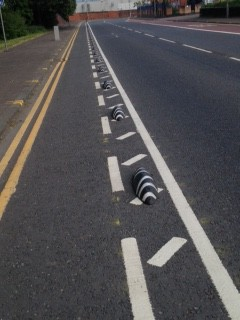
The lightweight plastic wands have not been welcomed as they are ugly and easily vandalised. Our enquiries revealed that these are temporary and the intention is to replace them with much less intrusive ‘armadillo humps’ should the lane be made permanent. You can feedback your views on the cycle lane trial here.
Wallington Station Mural a hit

The new mural under the bridge at Wallington Railway Station has been a hit with residents, adding some interest to a rather dreary underpass. It comes thanks to public realm funding from the Beddington & Wallington local Committee. The council allocates a pot of capital funding to each local committee to deliver projects proposed by the community and agreed by the committee. A list of recent projects funded this way can be seen here.
Bandon Hill School Street in Beddington Gardens

The feedback from this school street trial so far is that it is generally welcomed by local residents and parents, however there are still far too many drivers ignoring the restrictions. If the decision is made to make this school street permanent, then we will ask that it is enforced with numberplate recognition cameras to ensure compliance.
Fly-tipped or Marooned?

We recently had the strangest fly-tipping report of a yacht dumped in Buckingham Way. Fortunately it was quickly removed but it does show what can happen when you get a heavy downpour in Sandy Lane South!
All In Wallington still manage to bring some Christmas Cheer

It was clear quite early on that we couldn’t go ahead with the Wallington Christmas Festival this year, but the residents and businesses that make up our All In Wallington community group have still managed to arrange a Christmas Tree again, thanks to the generosity of Your Move, and new lights sponsored by Carpenters & Co.
Jean Grima, Ric Adams and the children of St Elphege’s school also worked to bring a Wallington ADVENT-ure TRAIL to attract some young code breakers with the chance to win a prize, kindly sponsored by Carpenter & Co.
Santa says that he will miss the children visiting him at his Wallington Grotto this year, but reassures us that he has taken all the measures required to still be able to still deliver presents safely this year.
Ward Surgeries and casework
We suspended our councillor ward surgeries in Wallington Sainsburys and will continue to do so until the need to socially distance is removed as it is not easily maintained in the space we occupy by the lifts.
We are willing to undertake site visits and meetings to discuss casework issues, as long as we can observe social distancing. Contact us via email or telephone as usual.
BOROUGH NEWS
Coronavirus: Local Information and Help
The council provides guidance and information on the latest lockdown requirements and how to get a test on its website as well as details of the support and financial help available.
There are grants of £500 available for people required to self isolate, and a range of grants for businesses affected by the various Tier restrictions.
Changes to waste collection over Christmas
Don’t forget that waste collections will change over the Christmas and New Year period. You can check the collection dates on the council website here.
Real Christmas trees will also be collected over the two week period from 18th January 2021.
The Household Reuse and Recycling Centre at Kimpton Way will remain open throughout lockdown except for Christmas Day, Boxing Day and New Years Day, and will continue to be booking only. You can book a slot here.
WARD PLANNING NEWS
DM2020/00810 6 Onslow Gardens Wallington Sutton SM6 9QN Demolition of existing outbuilding and erection of a detached dwelling with vehicular access from Onslow Gardens. Refused Aug 2020
DM2020/00501 50-52 Stanley Park Road Carshalton SM5 3HW Demolition of existing semi-detached dwellings and erection of a detached two storey building including accommodation in roof space to provide 7 self-contained residential units, provision of cycle/refuse stores, parking spaces and altered vehicular access to and from the front of the property. Refused Aug 2020
DM2020/00450 Monarch House 7 Stafford Road Wallington SM6 9AN Erection of a single storey rear conservatory, enclosure of under croft to form additional office floor space, alteration to parking, vehicle access from Onslow Gardens with new gates and boundary treatment. Still pending decision
New Applications:
DM2020/01805 Land At Woodcote Green Garden Centre Woodmansterne Lane Wallington SM6 0SU Demolition of existing structures, and erection of a two storey nursing home comprising 70 bedrooms, car parking, cycle storage, bin storage, access, landscaping and other associated works This application is for development on land designated as Greenbelt
DM2020/01589 31-35 Stafford Road Wallington SM6 9AP (old BP Garage site) Prior Approval in relation to the erection of 2 new floors to provide 10 self contained residential units. Refusal just in!
DM2020/01688 109 Boundary Road Wallington SM6 0TE 10th application for demolition of existing single storey detached garage and erection of a detached two storey dwelling in garden land to the rear of 109 and 107 Boundary Road with attached refuse storage area to the side of the property, parking to the front accessed from Brambledown Road Not accepted as valid as less than two years since a similar, refused application was submitted
So that is our last update for 2020. We wish you all a peaceful Christmas and hope for a new year that brings some relief from these difficult times.
Cllr Steve Cook, Cllr Jayne McCoy & Cllr Muhammad Sadiq
Your Lib Dem team for Wallington South
P.S. Please don’t hesitate to contact us if there is anything we can do to help: wallingtonsouth.libdems@gmail.com
About me

As a Liberal Democrat I believe that the work of politicians should be open & transparent. By detailing some of the work I am engaged with I can be accountable to the residents of Wallington South who voted me to be their representative on Sutton Council.
My blog also gives me the opportunity to express opinions on local issues; however the opinions expressed on this blog are personal and do not necessarily reflect the policy of the Liberal Democrats.
Cllr. Jayne McCoy
Published and promoted by Roger Thistle on behalf of Jayne McCoy and Sutton Borough Liberal Democrats, all at Kennedy House, 5 Nightingale Road, Carshalton SM5 2DN
 Sutton Liberal Democrats
- An error has occurred; the feed is probably down. Try again later.
- Liberal Democrats News
- An error has occurred; the feed is probably down. Try again later.
 Diary of a Sutton Councillor